ogram Atelier Meta
Making historic colour visible again.
In a non-commercial collaboration with ogram, Atelier Meta uses Codex inside InDesign and Photoshop to turn paint-layer investigations into a visual reconstitution of historic woodwork.
Talk to ogram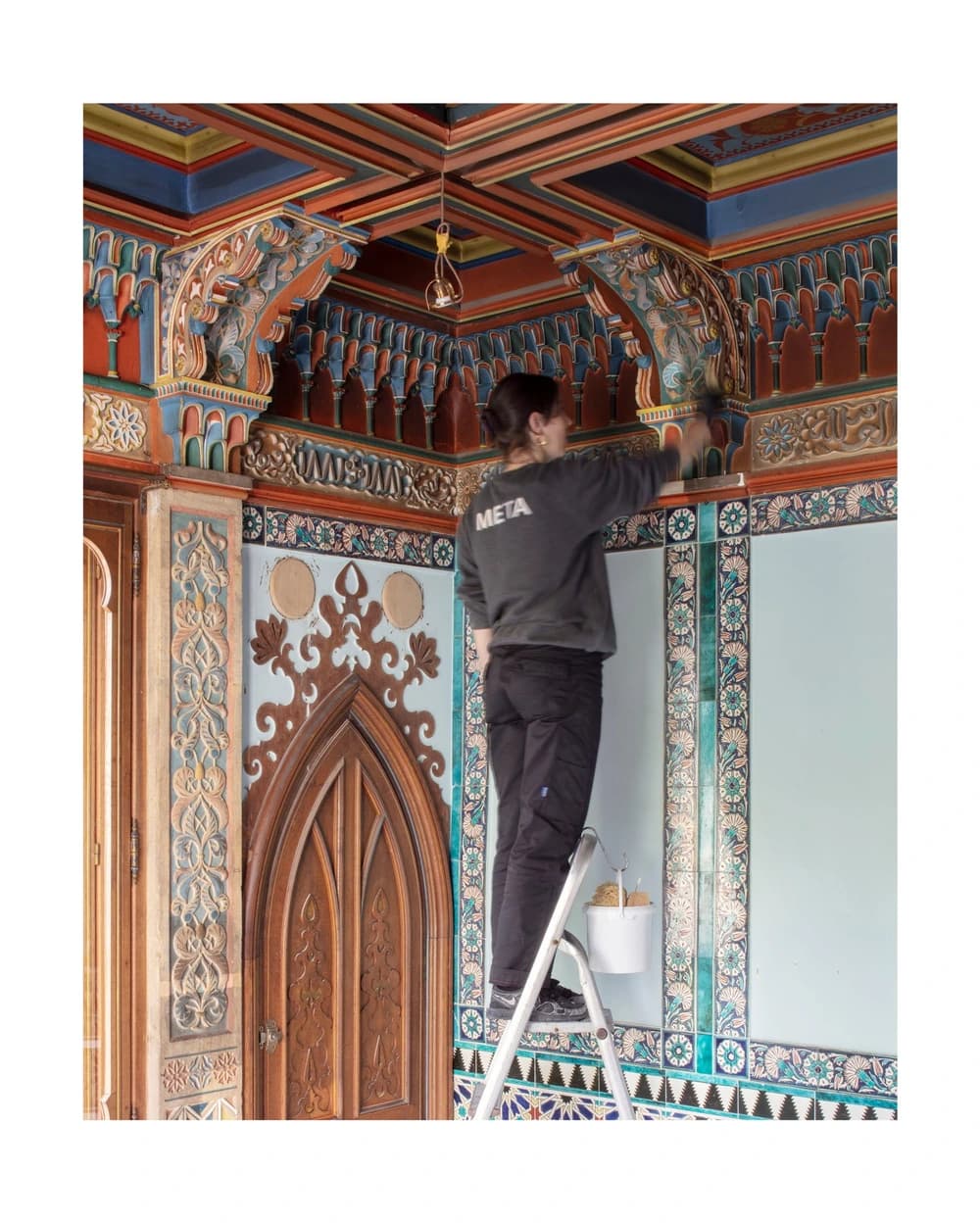
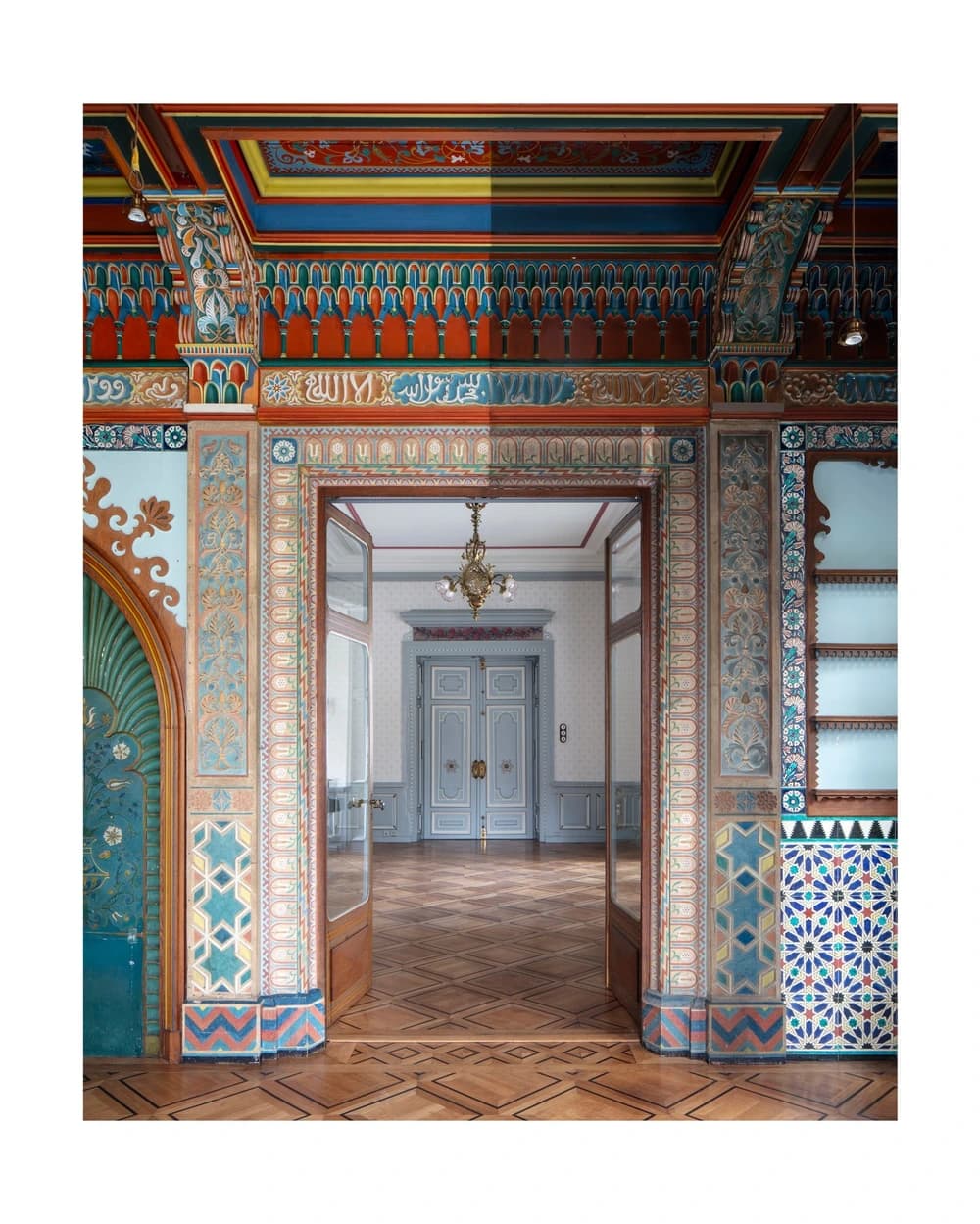
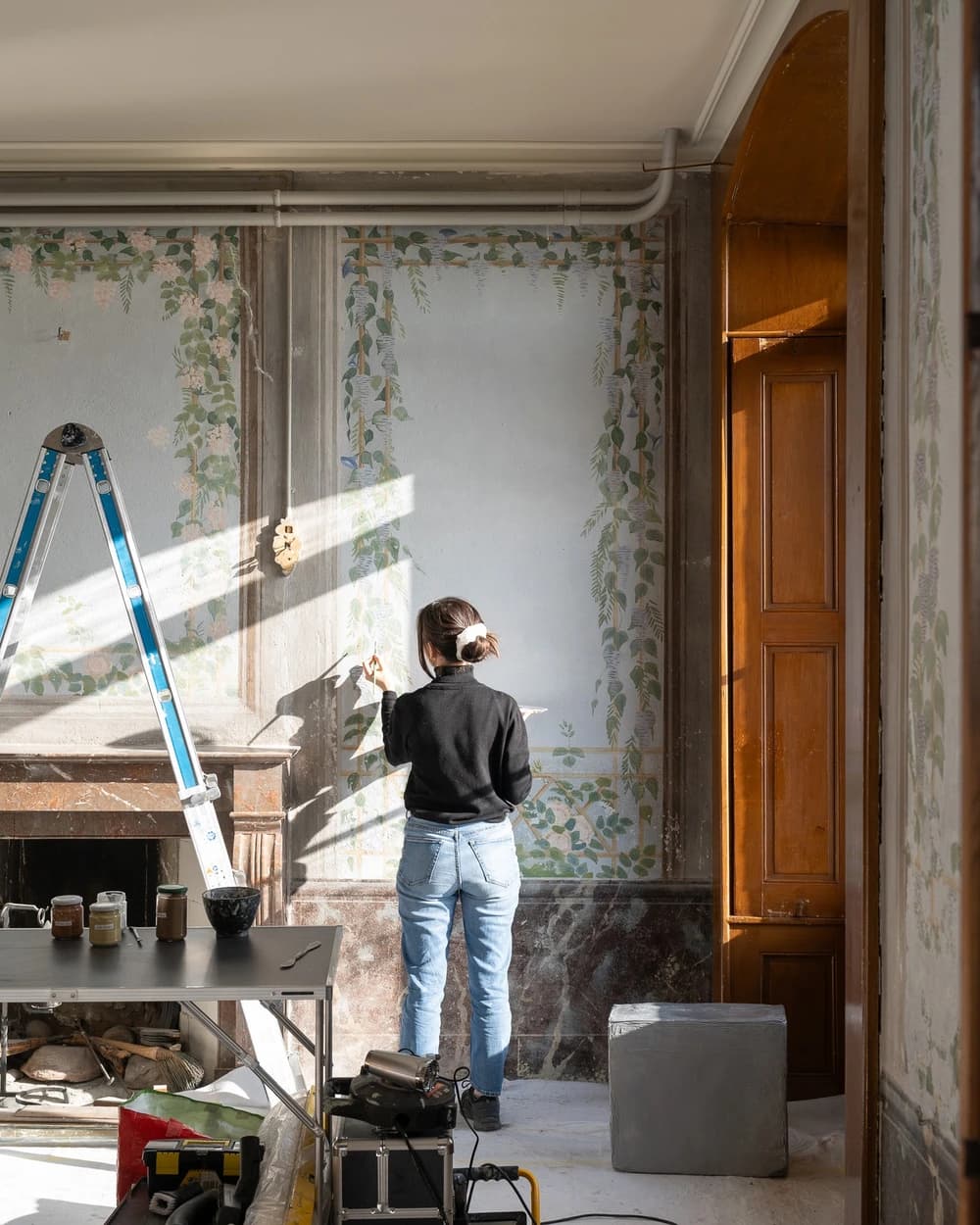
A selection of Atelier Meta’s conservation work. The woodwork study below is a separate computer-use demonstration.
Atelier Meta
- Practice
- Conservation-restoration
- Based in
- Lausanne & Morgins, Switzerland
- System
- Codex · computer use
- Website
- ateliermeta.ch
The workflow
2
Professional applications
InDesign and Photoshop, operated through their interfaces.
The workflow
5
Documented stages
From the original photograph to an approximate NCS interpretation.
The workflow
Editable
Photoshop layers
A working image the conservator-restorer can continue to refine.
The workflow
Linked
Back into the InDesign report
The visual interpretation returns to the investigation dossier.
ogram × Atelier Meta
In this story
Atelier Meta works where an artwork and its history meet: a painted ceiling, the polychromy of carved wood, a mural beneath later decorative campaigns. Based in Lausanne and Morgins, the Swiss conservation-restoration practice brings together expertise in architecture, wall paintings, sculpture and easel paintings. Meet Atelier Meta
Its four specialists share a foundation in postgraduate conservation training. Cinzia Di Ubaldo holds a master’s in conservation-restoration sciences; Sébastien Grau and Camille Vaschetto trained at master’s level in the conservation of easel paintings. Marie Sigrist holds an MA from Bern University of Applied Sciences, specialising in architecture and wall painting. Cinzia and Sébastien also hold MAS qualifications in heritage conservation and museology from the University of Geneva.
Marie’s work includes stratigraphic investigations and the interpretation of historic decorative schemes. That practice provides the starting point for this collaboration with ogram: giving an expert’s observations a visible form, through the same professional applications in which she already documents and develops her work. At ogram, we helped Atelier Meta carry out this exploration to show what Codex can do in a real-world setting, and because we love art and craft.
From a paint layer to a whole interior
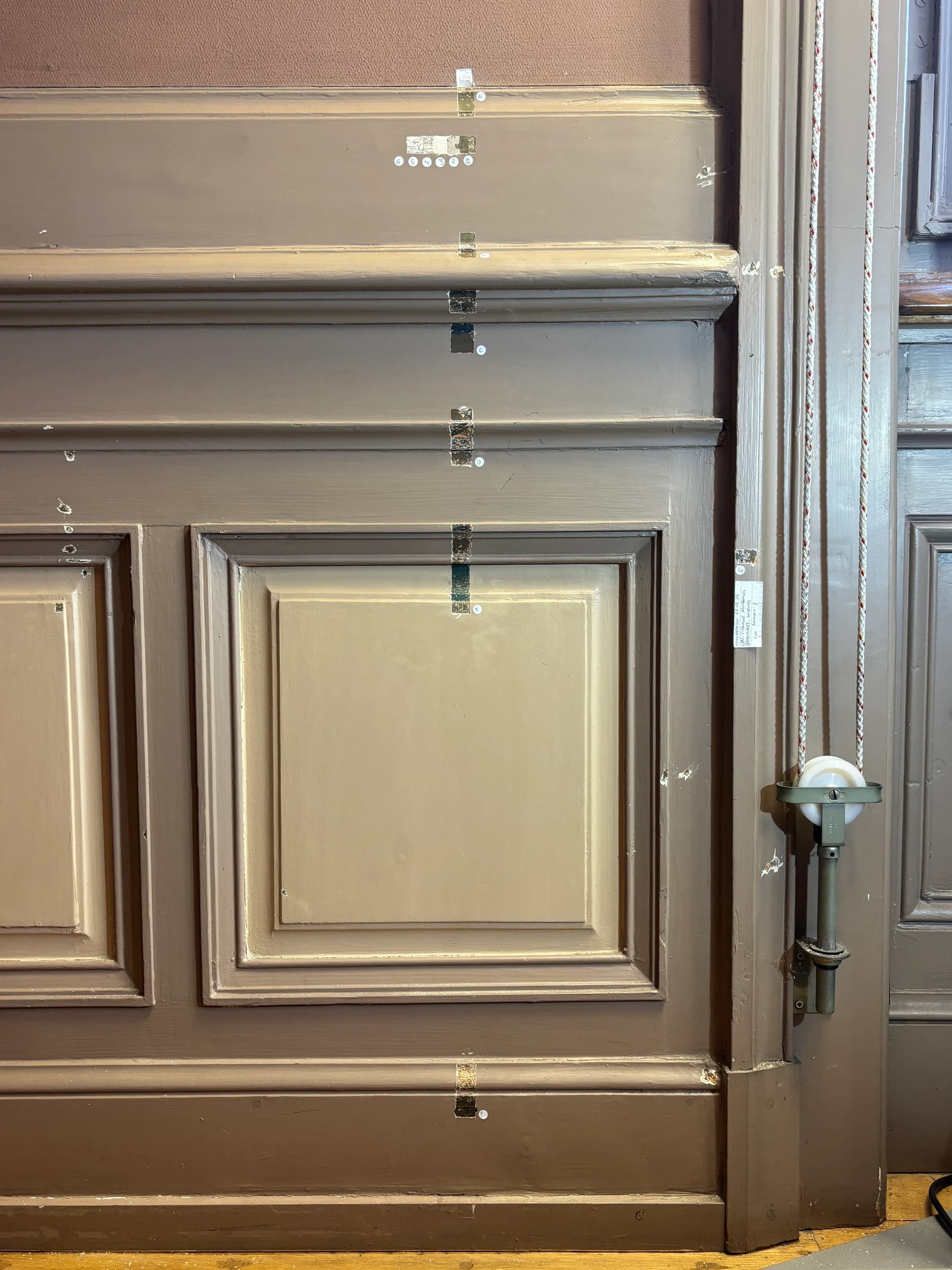
A sondage can expose a succession of paint layers on a few square centimetres of woodwork. Read alongside the surrounding fabric, these investigation windows help a conservator-restorer distinguish decorative campaigns and assign observed colours to panels, mouldings and framing elements. The resulting record is precise. For the owner commissioning a restoration, imagining the complete ensemble from those local observations is a different task.
Marie had already documented the woodwork in an InDesign report. Its colour map connects lettered areas of the photograph to the colours identified through investigation: khaki, dark green, deep blue, emerald and black. The question was how to carry that structured evidence into a coherent visual interpretation of the decor.
Computer use, inside the working tools
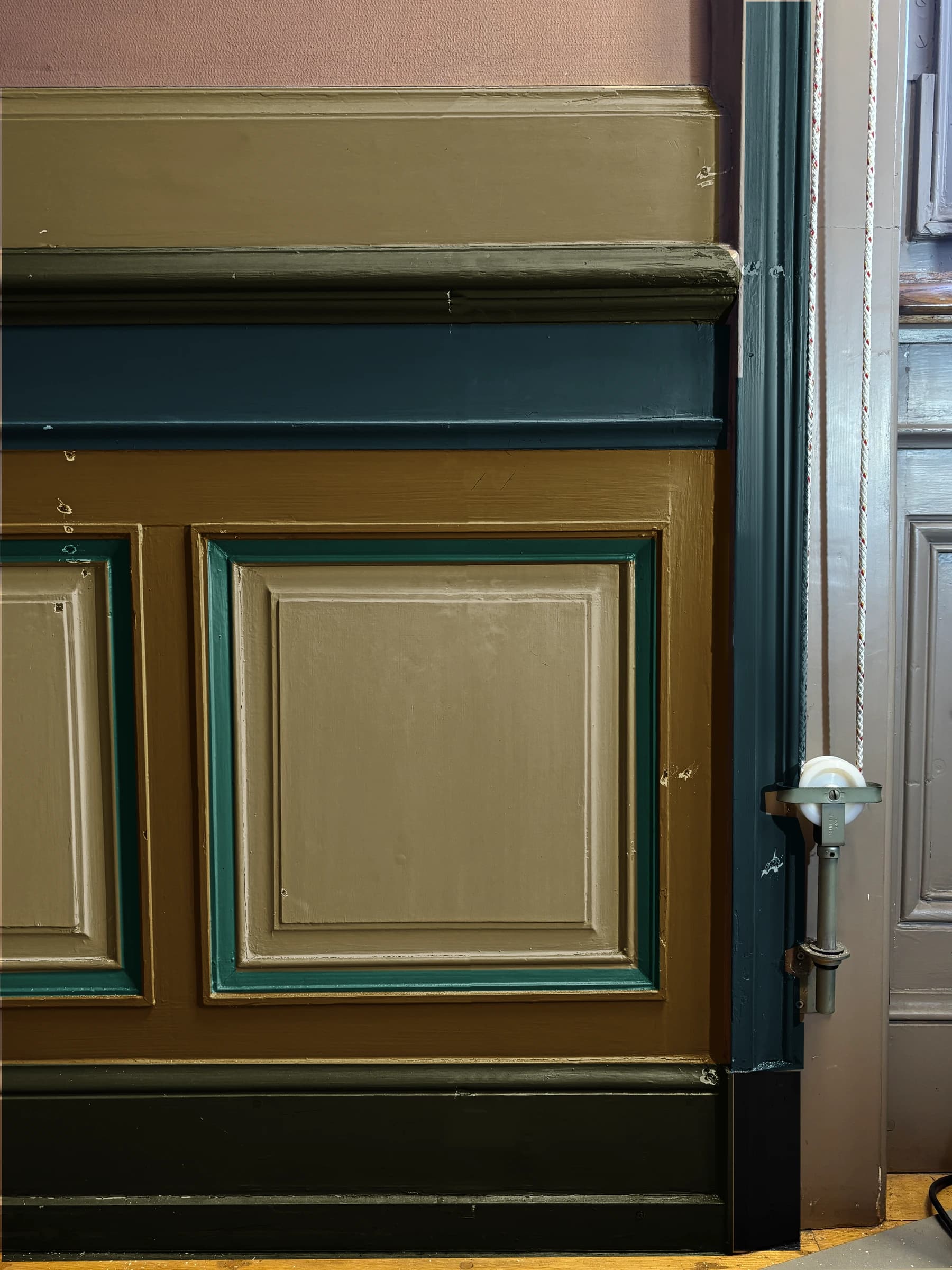
The workflow runs through Codex with computer use. In Marie’s demonstration, the agent works directly in the InDesign and Photoshop interfaces: it copies the report, transfers the colour assignments to the corresponding areas of the photograph, and produces a first colour-fill trial. The brief is carried through the applications, from the investigation document to the working image.
That first pass is a starting point for expert review. A uniform fill can obscure the very surface a conservator needs to read. Marie asks for texture, shadows and depth to be brought back. The agent reworks the image from her feedback, developing the chromatic interpretation while recovering the visual relief of the mouldings and panels.
One investigation. Five stages.
01 · The documented surface
The original photograph retains the investigation windows, surface condition and geometry of the woodwork.
The final interpretation remains editable in Photoshop and is linked back into InDesign, according to Marie’s account. This matters to the practice: an image can be revised, a colour assignment reconsidered, and the dossier developed further as the investigation progresses. The work stays in the tools used to prepare the deliverable.
A new way to commission the work
For an owner, a list of historic colours does not offer the same understanding as seeing those colours in relation: the depth of a blue frieze, the rhythm of green mouldings, the balance between a panel and its frame. A developed visual reconstitution makes the conservator’s reading of the evidence accessible before a physical intervention is undertaken.
This opens a service opportunity for Atelier Meta: a documented visual study that can accompany the investigation dossier and the discussion with a commissioning owner. The deliverable gives form to a proposed historical state, supports the presentation of restoration options, and helps explain the significance of surviving decoration.
Digital reconstitution is already part of conservation practice. The opportunity here is to carry more of its preparation through the full computer workflow, under the specialist’s direction. With Codex operating the applications, Marie can express an intention, inspect the result and request a revision in the language of her discipline.
The interpretation belongs to the expert
A convincing image still needs a clear account of what it represents. The NCS conversions in this demonstration are approximate; a screen image is not a physical colour reference. The choice of decorative campaign, the relationship between the investigated areas and the extent of any extrapolation remain matters for conservation judgment.
The five documented stages trace a concrete path from observed paint layers to an editable visual interpretation. Its value lies in the combination: the conservator-restorer’s knowledge of the object, and an AI system able to act across the applications needed to give that knowledge a finished form.
Reconstruction images and workflow account supplied by Marie Sigrist, Atelier Meta. Photographs of the atelier’s other conservation projects are credited above. The abstract cover is an editorial illustration.
Your expertise. More room to work.
Bring the tools you use, the work you know, and the standard it needs to meet.
Talk to ogram